Georgian Holt
A Sense of Place

On 1st May 1708 Holt was largely destroyed by a raging fire. But in one of those strange twists of fate, tragedy eventually turned into triumph.
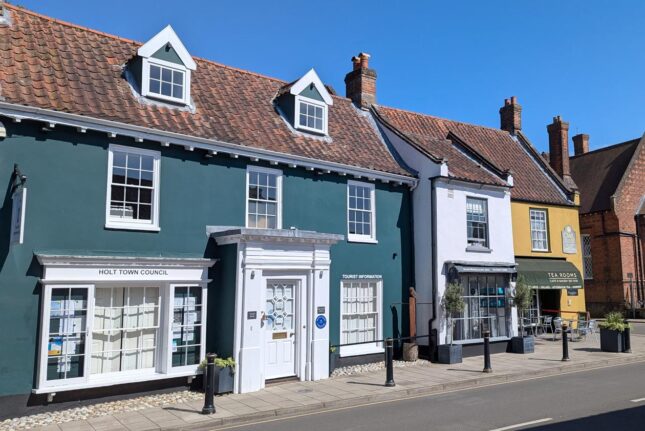
Holt literally arose from the ashes, through the sheer determination of the community and the builders and craftspeople who created the attractive Georgian market town we know today.
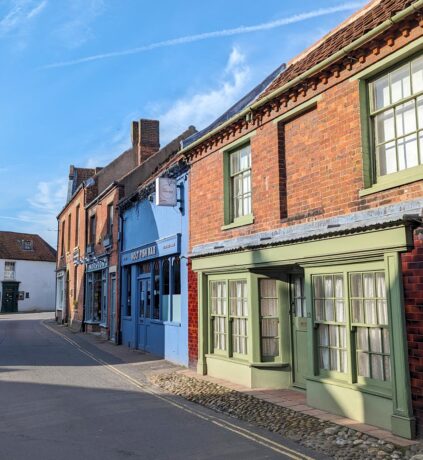
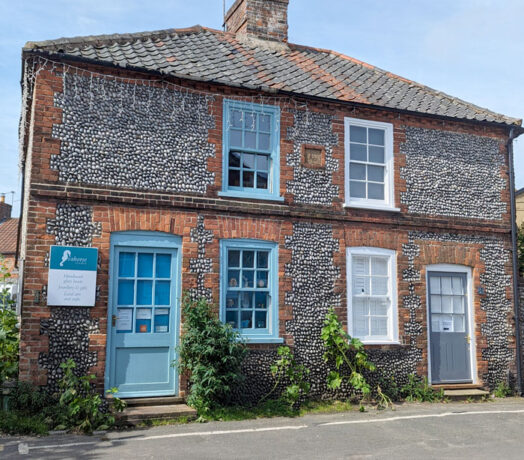
Stone by stone, they built the many little alleyways and passages, the brick and flint walls, the carved details on doorways and window frames – all of which give Holt such a unique sense of place.

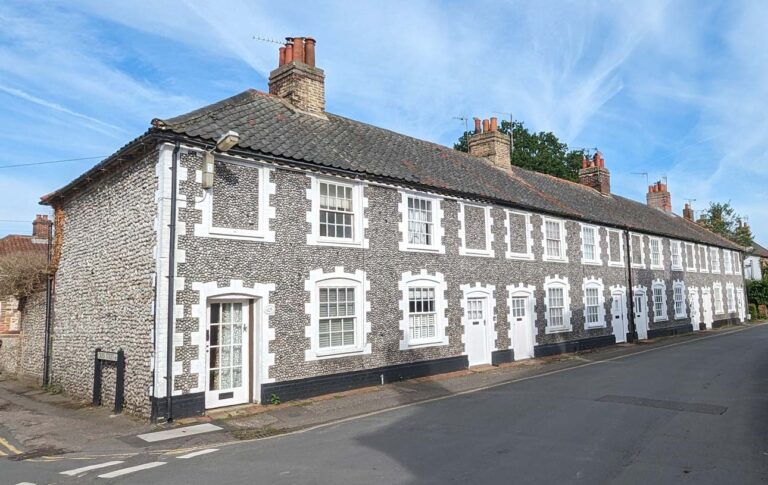
The materials were local. The blue-grey coloured flints were literally dug out of the surrounding fields and the soft apricot/red bricks were made locally too. It is therefore no accident that these blended colours and rich textured surfaces work so well with the surrounding landscape and Norfolk skies.
The beauty of Holt also lies in the grouping of its small buildings. The first impression is one of attractive balance and harmony of proportion. The Georgian builders of Holt understood instinctively that every design detail is visually related to everything around it – the proportion of a doorway to a window, the pitch of a roof, and the importance of decorative details such as fluted columns, sash windows and fan lights which enlivened the building.
Like other Georgian market towns, we wish to celebrate the quality of our architectural inheritance. Not by preserving the town in aspic, but by encouraging good design and smart thinking to integrate the old with the new.
Scale and Proportion
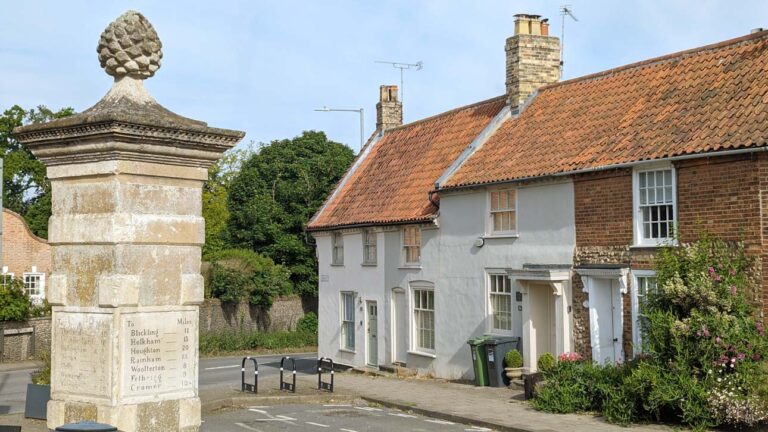
Georgian townhouses of the type found in Holt were designed according to strict building regulations, based on the idea of building a group of houses to look as if they were one great house joined to other terraces within the street.
In cities such as Bath and Edinburgh this idea was expanded into the grand square and circuses for the smartest houses, with the smaller ones radiating out and diminishing in scale in the streets behind. The principle is that every house in the street and every design detail, such as a window, shopfront or a sign, is proportionally related to another to create an integrated, harmonious visual effect.

The three design elements of the classical column
The whole plan was worked out with mathematical precision using formulae based on the three design elements of the classical column (plinth, column, capital) to find proportions which were pleasing to the eye. Published pattern books were used to copy details and designs and these would have been used by the architects and builders of eighteenth century Holt.
Building legislation introduced in the eighteenth century, particularly the Building Act of 1774, was intended to improve standards of construction and reduce fire risk by eliminating highly combustible materials.
‘Rates’
Houses were coded according to ‘Rates’ (the origin of the rates system), the First Rate house being the grandest, valued at over £850 and occupying 900 square feet, whilst the simplest was the Fourth Rate house, occupying less than 350 square feet. But all had to conform to specified design proportions.
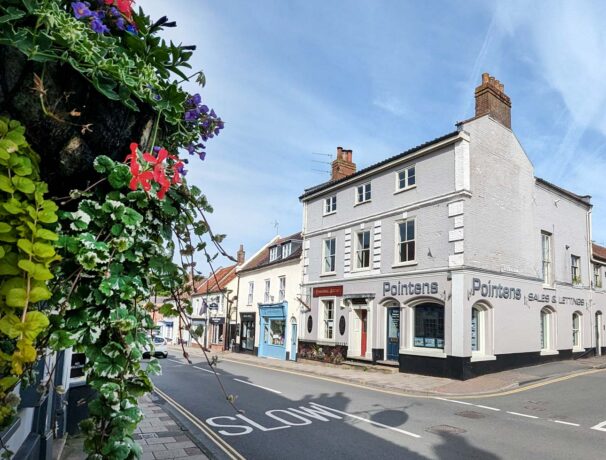
Depending on the height of the house, the elevation might have two, three or four storeys, but in each case the windows and their detailing would reduce in height and width towards the top of the building to achieve an effect of visual lightness and elegance.
Sliding sash windows, introduced from Holland in the late seventeenth century, were divided by window bars into six or eight panes, depending on their position on the facade. The amount of detail on the window sills and balconies would vary according to the Rating but, once again, in each case it would follow a strict proportional design relationship to maintain a visual unity.
Signage & Shopfronts
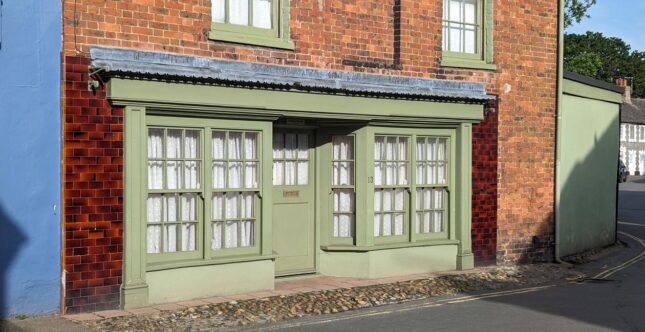
Commercial signage, whether painted fascia boards or hanging signs, were designed to match the scale and detailing of the building. During the early eighteenth century, shopfronts were simply front rooms of merchants’ houses with enlarged sash window openings, and markets were streets or squares with booths.
But in the Regency period, elaborate double-bowed sashes were popular, requiring a high degree of joinery skills, as can be seen today on the lower sash window of The King’s Head in Holt.
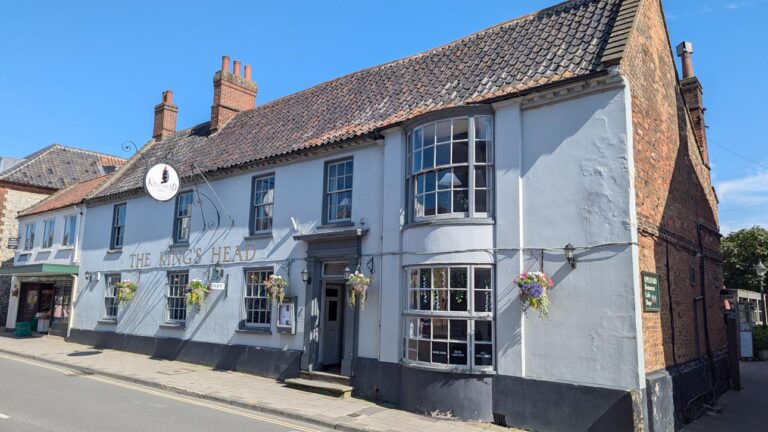
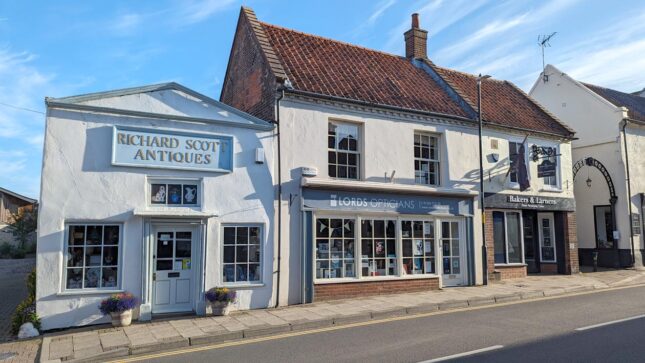
It is satisfying to note that some shopfronts in Holt have been rescued from the mediocrity of inappropriate plate glass windows and have been sensitively restored to resemble their Georgian heritage, as is the case with Manor House in the High Street.
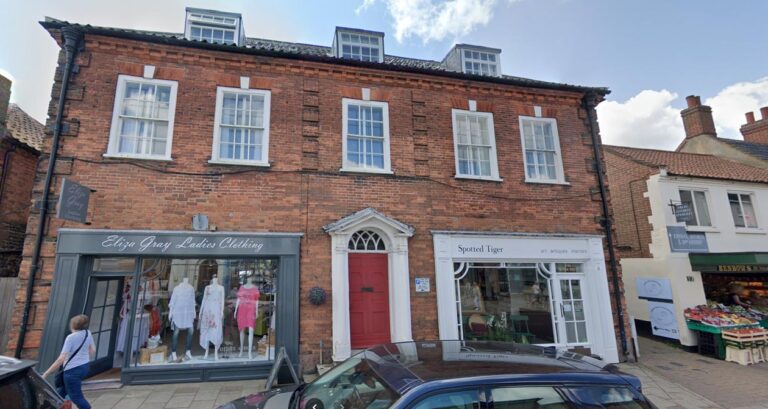
Colour and Texture

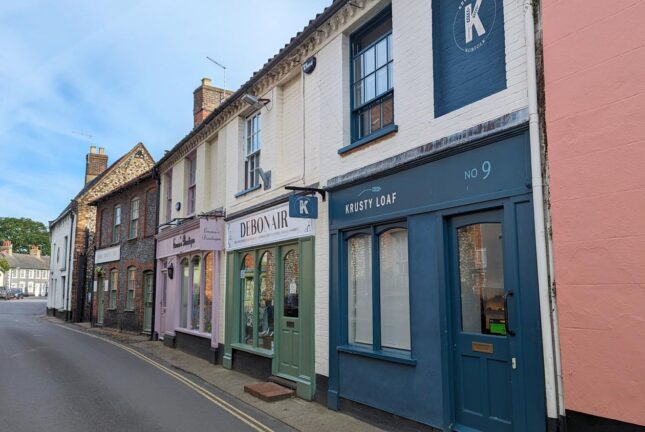
Colours used in the Georgian period ranged widely from deep saturated colours to lighter tones. The common characteristic is a palette of subtle, blended colours which absorb the light and create harmonious rich textures. The keywords here are blended and matt.
Many contemporary paint manufacturers produce a wide range of ‘heritage’ colours which reproduce these effects. Many corporations and global brands also adapt their corporate signage on historic heritage buildings and in conservation areas.
The Holt Society’s Millennium sign in Appleyard was devised by Michael Barrett (1949-2002) local historian and active member of the Holt Society, and hand-painted by well known local sign maker, Basil Huggins of Fakenham, using traditional materials and Georgian inspired colours and lettering.
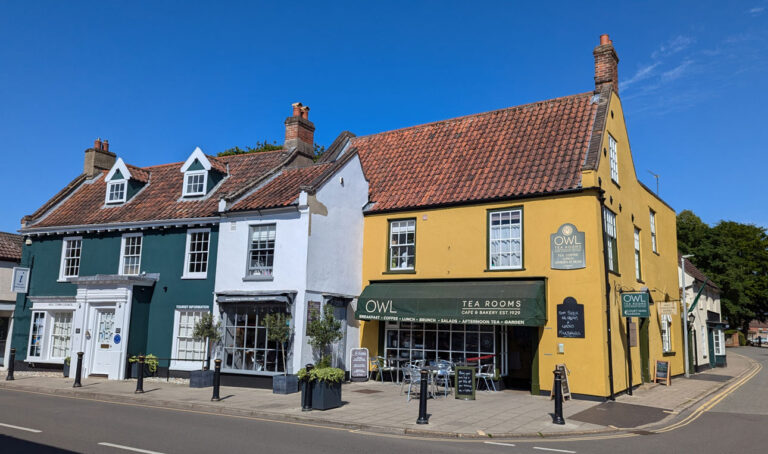
Many shop fronts in Holt have specially hand-painted signs which contribute to the personality of the business and the attractiveness of the street. Others have chosen mass production techniques but have used colour and lettering sensitively to blend with the surrounding buildings. Crude use of colour, shiny texture-less surfaces, insensitive typography and overly dominant signage simply degrade our visual environment. Holt deserves better.